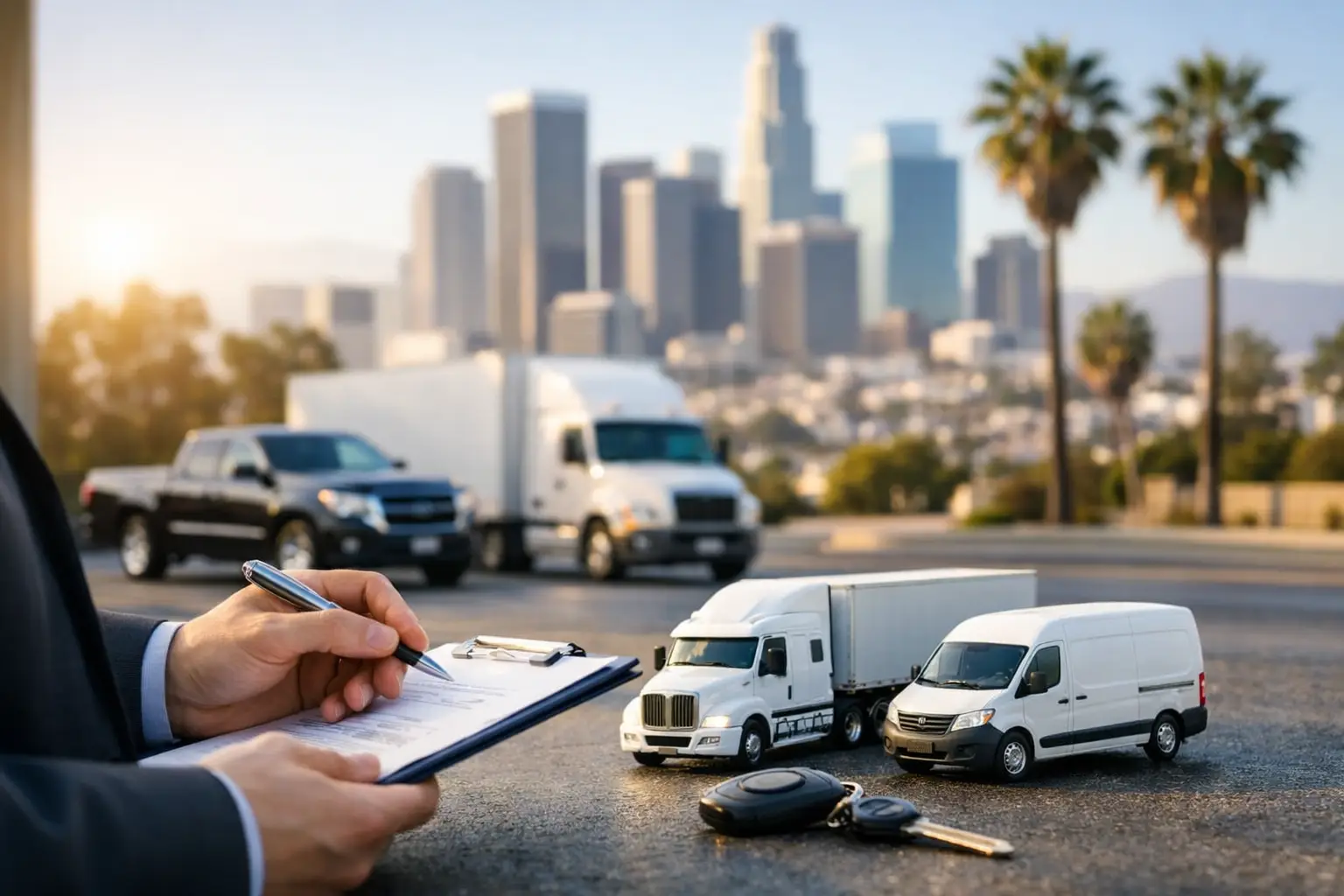
A work truck backs into a customer’s gate. A delivery van gets sideswiped on Highway 101. An employee runs errands in a personal car and causes an accident on the clock. These are the moments when a commercial auto insurance guide becomes more than a research task - it becomes a financial safeguard for your business.
For California business owners, commercial auto coverage is not just about checking a box for a registered vehicle. It is about protecting income, keeping jobs moving, and making sure one accident does not disrupt everything you have built. If your business owns, leases, or regularly uses vehicles for work, the right policy can make the difference between a manageable claim and a costly setback.
What commercial auto insurance actually covers
Commercial auto insurance is designed for vehicles used in business operations. That can include company cars, pickup trucks, vans, service vehicles, food trucks, and larger fleets. In many cases, it can also apply to specialized vehicles depending on how the business operates.
At its core, this coverage helps pay for bodily injury and property damage if your business vehicle causes an accident. It can also help cover damage to your own vehicle, medical expenses, and losses tied to theft, vandalism, weather, or other covered events.
The exact protection depends on the policy, but most business owners should expect to review liability coverage, collision coverage, comprehensive coverage, uninsured and underinsured motorist protection, and medical payments. Some businesses also need hired and non-owned auto coverage, which can be critical if employees use rented vehicles or their own cars for business tasks.
That last point often surprises owners. A personal auto policy usually was not built for regular business use. If a vehicle is being used to serve customers, transport tools, make deliveries, or move between job sites, there may be coverage gaps that only a commercial policy can address.
Who needs this commercial auto insurance guide most
Some businesses know immediately that they need commercial auto coverage. Landscapers, contractors, electricians, plumbers, delivery services, real estate teams, home health providers, and mobile service businesses are obvious examples. If the business owns the vehicle and uses it for work, the need is clear.
But the gray areas are where business owners can get into trouble. If you are a sole proprietor using a pickup for client visits, a bakery making regular deliveries, or a coastal property manager driving between locations, you may still need business auto coverage even if the vehicle looks like a personal car.
Usage matters more than appearance. Insurers look at who owns the vehicle, who drives it, what it carries, how often it is on the road, and what kind of work it supports. A sedan used once a month for a bank deposit creates a different risk than a van making daily deliveries, but both can raise business-use questions.
California risks change the conversation
In California, especially in coastal communities, driving risk is shaped by density, tourism, weather patterns, and repair costs. Traffic congestion increases the chance of collisions. High-value property areas can make third-party damage claims more expensive. If your business depends on vehicles to maintain service across several cities, more road time naturally means more exposure.
There is also the cost environment to consider. Vehicle repairs, medical treatment, and liability claims can become expensive quickly in California. State minimums may satisfy legal requirements, but they often do not reflect real-world claim severity. That is why many business owners choose limits based on asset protection and contract requirements, not just bare compliance.
For businesses operating near the coast, salt air, storm conditions, and heavy seasonal traffic can add wear, delay service calls, and increase claim complexity. A generic policy built without local context may technically provide coverage, but it may not reflect how your vehicles are actually used.
Key coverages to review in a commercial auto insurance guide
Liability coverage is the foundation of a commercial auto policy because it helps pay for injuries or property damage your driver causes to others. If your business has vehicles on the road regularly, this is usually where limits deserve careful attention. Lower premiums can be appealing, but low liability limits can leave a business exposed if an accident involves serious injuries or multiple vehicles.
Collision coverage pays for damage to your vehicle after an accident, regardless of fault. This matters when your business cannot afford long downtime or out-of-pocket repair bills. Comprehensive coverage applies to non-collision losses like theft, fire, vandalism, or certain weather events. For businesses that park vehicles outside, store equipment in them, or operate year-round, this can be especially valuable.
Uninsured and underinsured motorist coverage deserves a close look in California. Even careful drivers can be hit by someone with too little insurance. This coverage can help protect your business and occupants when the at-fault driver cannot fully pay.
Medical payments coverage can help with immediate medical costs after an accident, while roadside assistance, rental reimbursement, and towing endorsements may support continuity when a vehicle is out of service. These add-ons are not necessary for every company, but they can be worthwhile for businesses where delays mean lost revenue.
If employees ever use personal vehicles for work errands, meetings, deposits, or deliveries, hired and non-owned auto coverage should be part of the conversation. Many owners assume the employee’s personal policy is enough. Sometimes it is not, especially if the business is drawn into a liability claim.
What affects cost
Commercial auto pricing is never based on one factor alone. Insurers usually look at vehicle type, age, and value, along with how the vehicle is used, annual mileage, driver history, garaging location, and coverage limits. A clean driving record helps, but it is only one piece of the picture.
A contractor hauling equipment faces a different exposure than a consultant driving to appointments. A three-vehicle artisan business has different needs than a twenty-vehicle service fleet. Even within the same industry, costs can vary based on radius of operation, cargo, employee screening, and claim history.
There is always a trade-off between premium and protection. Choosing higher deductibles can reduce upfront cost, but it also increases what you pay during a claim. Lower limits can save money in the short term, but they can create serious pressure if an accident exceeds coverage. Good policy design is rarely about finding the cheapest number. It is about matching protection to the way your business actually works.
How to choose the right policy
Start with a simple question: what would a vehicle claim interrupt in your business? Revenue, contracts, scheduling, reputation, and payroll can all be affected by one accident. That is why the best policy review starts with operations, not just insurance terms.
Look at every vehicle your business owns, leases, or regularly uses. Consider who drives them, how often they are on the road, what they carry, and whether employees ever use their own cars for company tasks. From there, review liability limits, physical damage coverage, deductibles, and any endorsements that support continuity.
It also helps to think beyond the vehicle itself. If your business has contracts with landlords, municipalities, or commercial clients, there may be insurance requirements that affect limits or endorsements. If a financed vehicle is involved, the lender may require certain coverages. If your business brand depends on reliability, downtime costs should be part of your decision.
This is where a local advisor can be especially useful. A California-focused agency like Central Coast Insurance can help business owners compare options in a way that reflects local roads, regional claim trends, and the realities of doing business in coastal communities.
Common mistakes business owners make
One of the most common mistakes is assuming a personal auto policy covers business use without limitation. Another is insuring only company-owned vehicles while overlooking employee-owned cars used for work. Both can create unpleasant surprises at claim time.
Business owners also sometimes buy based on price alone and underestimate liability exposure. A minor fender bender is one thing. A serious injury claim, damaged client property, or multi-vehicle accident is another. Insurance should be built for bad days, not average ones.
The other mistake is letting the policy sit unchanged while the business evolves. New drivers, added vehicles, expanded service areas, and changing operations can all affect what coverage should look like. A policy that fit two years ago may not fit today.
A better way to think about coverage
The right commercial auto policy supports more than legal compliance. It protects your ability to show up for customers, keep employees moving, and recover quickly when something goes wrong.
That is why the best commercial auto insurance guide is not just a list of coverage types. It is a reminder to insure the business you actually run, with limits and options that reflect your roads, your drivers, and your level of risk. If there is any uncertainty about whether your current policy truly fits, that is usually the right time to ask better questions and get a more tailored review.