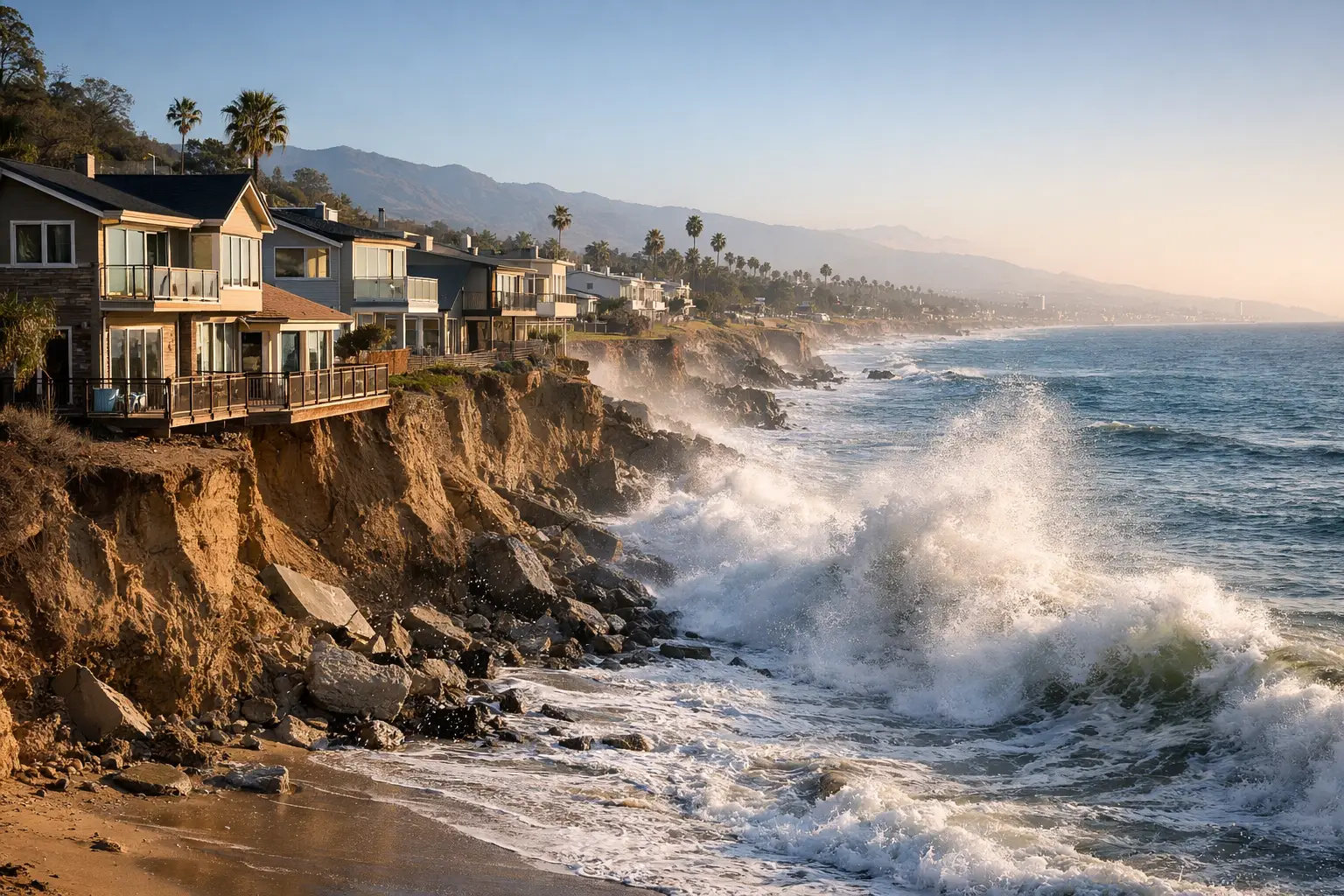
A king tide that reaches the bottom step, a winter storm that sends water under a garage door, or a bluff that loses several feet after heavy rain can change the insurance conversation quickly. The emerging risks for coastal properties are not limited to one dramatic event. For California homeowners and business owners, they often build gradually through changing weather patterns, aging infrastructure, shifting shorelines, and tighter insurance markets.
Coastal living offers extraordinary value, but it also calls for a more thoughtful approach to protection. A standard policy may still be an essential foundation, yet the details of where a property sits, how it is built, and how it is used can affect which gaps deserve attention.
Why emerging risks for coastal properties are different
Coastal properties are exposed to overlapping conditions that may not exist a few miles inland. Salt air can accelerate wear on roofs, exterior fixtures, and mechanical equipment. Wind-driven rain can find weak points around windows, vents, and siding. High tides, storm surge, runoff, and overwhelmed drainage systems can all create water problems, even when a property is not directly on the beach.
The challenge is that these risks can compound each other. A major storm may bring intense rainfall at the same time as high surf and elevated tides. Water that would normally drain away may have nowhere to go. If hillsides are saturated, erosion, mudflow, or slope movement can become a concern as well.
For property owners, this means assessing risk by address rather than relying on a broad description such as “near the coast.” Two homes in the same community can have very different exposures based on elevation, drainage, construction, proximity to a bluff, roof condition, and prior loss history.
Flood exposure is changing beyond mapped flood zones
Flood risk is often misunderstood because many owners associate it only with homes in high-risk flood zones. In reality, water can enter a property through storm drains, backed-up sewer lines, surface runoff, or rising groundwater. A home outside a designated flood area may still face a meaningful loss after an atmospheric river or a coastal storm.
Most homeowners and commercial property policies do not cover flood damage in the same way they cover sudden fire or wind losses. Flood coverage is generally purchased separately, and the right approach depends on the property’s location, mortgage requirements, building characteristics, and the value of what is inside.
For a coastal business, the question is broader than the building itself. Consider inventory, equipment, records, tenant improvements, and the income needed to keep the business operating while repairs are underway. A restaurant, retail shop, office, or vacation rental can feel the financial effects of water damage long after the water recedes.
Drainage and sewer backup deserve a closer look
Not every water loss is technically a flood. Water or sewage that backs up through drains can involve a different coverage issue, often addressed through a specific endorsement or coverage option. Likewise, water that enters through a deteriorated roof, poorly maintained exterior, or long-term seepage may be treated differently than sudden accidental damage.
That distinction matters. Reviewing how water could reach your property is more useful than assuming one form of protection handles every scenario.
Erosion, bluff movement, and land stability
Along parts of California’s coast, erosion is a long-term property risk with immediate consequences. Wave action, changing sand levels, heavy rain, and inadequate drainage can affect bluffs, foundations, retaining walls, access paths, and utility connections. A structure can remain intact while the land supporting it becomes less stable.
Coverage for earth movement, landslide, erosion, and gradual deterioration can be limited or excluded under many policies. The exact cause of damage matters, and insurance decisions may turn on facts that are difficult to sort out after a loss. This is one reason to document property conditions before a storm season and address visible maintenance concerns early.
For homes near a slope or bluff, work with qualified local professionals to understand drainage patterns and signs of movement. Cracks in hardscape, leaning fences, new gaps around doors or windows, and changes in a hillside are not details to put off until the next renewal. They may signal a problem that needs attention before it becomes a claim.
Wind, salt air, and the hidden cost of maintenance
California coastal properties do not always face the same hurricane conditions seen in other regions, but wind and wind-driven rain still matter. Loose roof materials, aging flashing, vulnerable skylights, damaged fencing, and exposed outdoor equipment can all increase the severity of a storm loss.
Salt air adds a slower, less visible layer of exposure. Corrosion can shorten the life of metal fixtures, HVAC components, gates, railings, fasteners, and electrical equipment. Standard property coverage is designed for covered accidental losses, not routine wear, corrosion, or deferred maintenance. Keeping a property well maintained is therefore both a practical protection strategy and an insurance consideration.
A seasonal inspection can be especially valuable for second homes, rentals, and commercial buildings that are not occupied every day. Confirm that gutters and drains are clear, roof penetrations are sealed, trees are managed, exterior hardware is secure, and water shutoff systems are understood by whoever oversees the property.
Insurance availability can be a risk of its own
For many California owners, the concern is not only what could damage the property. It is also whether the current insurance arrangement still fits the risk. Coastal location, rebuilding costs, prior claims, roof age, wildfire exposure, and carrier underwriting changes can all influence availability and pricing.
This does not mean every coastal property will be difficult to insure. It does mean renewals deserve more attention than they once did. Waiting until a cancellation notice or escrow deadline can reduce options and create unnecessary pressure.
A proactive review should look beyond the premium. Replacement cost should reflect realistic rebuilding expenses, including local labor and material conditions. Ordinance or law coverage can matter when repairs trigger updated building-code requirements. For owners with high-value homes, detached structures, pools, docks, guest units, or substantial personal property, policy limits should reflect the full picture.
Businesses should also examine whether limits for equipment, inventory, tenant improvements, and loss of income still match current operations. A policy that fit when a business opened may be inadequate after expansion, higher supply costs, or changes in how the property is used.
Protecting the property before a loss
Insurance is strongest when paired with practical risk management. Coastal owners do not need to solve every future scenario at once, but they should prioritize the exposures most likely to affect their address.
Start by keeping photographs, receipts, renovation records, and an inventory of major belongings or business assets in a secure digital location. Review your roof, drainage, exterior openings, and trees before the rainy season. If your property is in a flood-prone area, understand where water may travel during a severe storm and consider appropriate mitigation measures with qualified professionals.
For businesses, create a simple continuity plan that identifies who can shut off utilities, protect records, communicate with employees, and move essential equipment. Include alternate ways to serve customers if access to the building is limited. Business interruption planning is not only for major disasters. Even a short closure during a busy season can create a meaningful financial strain.
A tailored review creates clearer choices
There is no single coastal insurance checklist that works for every California property. A hillside home in Santa Cruz, a beach-adjacent rental in Pismo Beach, and a retail business in Monterey may all need different conversations. Flood exposure, land stability, building materials, occupancy, and financial priorities all influence the right mix of protection.
An experienced local advisor can help distinguish between what a policy covers, what may need separate coverage, and where maintenance or mitigation should carry part of the responsibility. At Central Coast Insurance, that conversation starts with the property and the people who depend on it, not a generic online form.
Before the next storm season or renewal notice arrives, take time to review what has changed around your property and in your life. A clearer understanding of your coastal risks can help you make confident decisions while there is still time to choose your options.