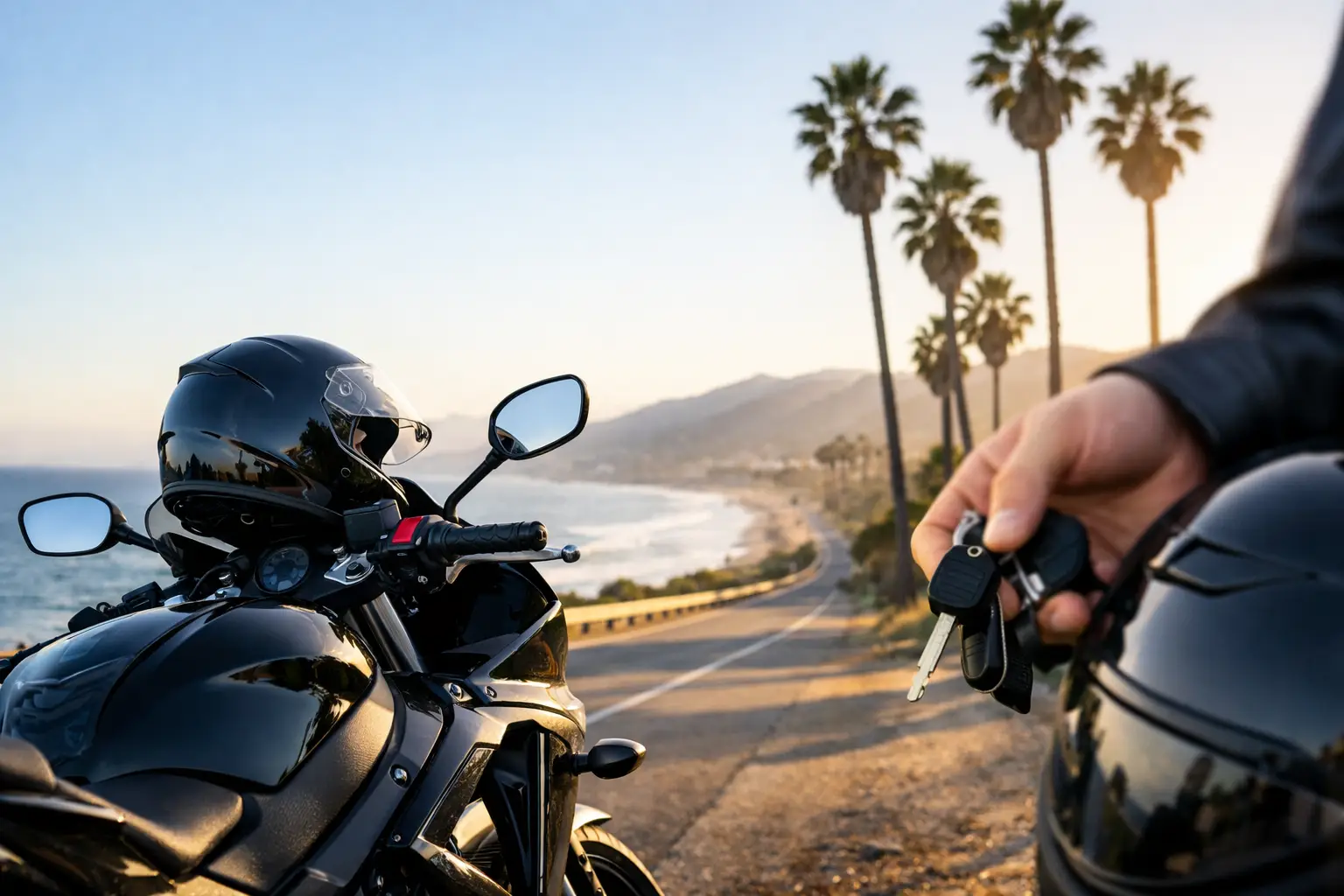
A motorcycle can make a Central Coast commute, a weekend canyon ride, or a trip up Highway 1 feel like something more than transportation. But before the kickstand goes up, motorcycle insurance California requirements set the minimum protection every rider must carry. Those minimums are straightforward, but they are not always enough to protect your savings, your bike, or the people who depend on you.
The right policy starts with California’s legal requirements, then accounts for how and where you ride. A rider who keeps a motorcycle in a garage and uses it occasionally has different needs than someone commuting through Santa Barbara, San Luis Obispo, or Monterey County every day.
What California Requires for Motorcycle Insurance
California requires registered motorcycles to carry financial responsibility. For most riders, that means purchasing a liability insurance policy that meets the state’s minimum limits. The same basic liability rules apply whether you ride a touring bike, sport bike, cruiser, scooter, or other street-legal motorcycle.
California’s minimum liability limits are often written as 15/30/5. That means your policy must provide at least:
- $15,000 for bodily injury or death to one person in a single accident
- $30,000 total for bodily injury or death to all people in a single accident
- $5,000 for property damage in a single accident
Liability coverage pays for injuries or damage you cause to others when you are at fault. It does not pay for your own medical bills, repairs to your motorcycle, or damage caused by theft, fire, vandalism, or a crash with an uninsured driver.
The state minimum satisfies the legal requirement, but it can be exhausted quickly. A single emergency room visit, a newer vehicle damaged in traffic, or an accident involving more than one injured person can exceed 15/30/5 by a wide margin. Once your liability limit is used up, you may be personally responsible for the remaining costs.
Proof of Insurance Is Part of Riding Legally
You should be able to show proof of motorcycle insurance whenever you ride. Law enforcement may request it during a traffic stop or after an accident, and the California Department of Motor Vehicles may require proof when you register or renew registration for your motorcycle.
Many insurers provide an insurance ID card through a mobile app, which can be a convenient option when you are away from home. A printed card is still a practical backup, especially on longer rides where a dead phone battery or limited service could make digital proof harder to access.
Riding without required insurance can lead to fines, registration consequences, license suspension, and the cost of getting coverage reinstated. More significantly, an uninsured accident can put your personal finances at risk. The immediate savings of skipping coverage rarely compare with the potential cost of one serious claim.
Motorcycle Registration and Insurance Work Together
Insurance and registration are separate responsibilities, but they are closely connected. Your motorcycle needs to be properly registered for use on public roads, and its insurance must remain active. If a policy cancels or lapses, do not assume you can wait until the next renewal to address it.
A coverage gap can create problems with the DMV and may affect future insurance pricing. If you are storing a bike for an extended period, talk with an advisor before reducing coverage or canceling a policy. You may still want protection against theft, fire, vandalism, or other non-driving losses while the motorcycle is parked.
Why State Minimum Limits May Not Be Enough
Minimum coverage is designed to establish a legal baseline, not to fully protect every California household. For riders with a home, savings, a business, or future income to protect, higher liability limits are often worth considering.
Imagine you lose control on a wet coastal road and damage an SUV while injuring its driver. The property damage alone may be far beyond $5,000. If the other driver misses work or needs ongoing treatment, bodily injury costs can grow even faster. Higher limits can provide a much stronger financial buffer when an accident becomes more serious than expected.
The appropriate amount depends on your financial picture, riding habits, and other insurance policies. Some riders may also benefit from an umbrella policy, which can add liability protection above the limits of qualifying home, auto, and motorcycle policies. This is particularly relevant for households with meaningful assets or higher liability exposure.
Coverage That Helps Protect You and Your Motorcycle
Beyond liability, several coverages can make a motorcycle policy much more useful after a loss. The best combination depends on the bike’s value, whether it is financed, where it is stored, and how much out-of-pocket risk you are comfortable accepting.
Collision and comprehensive coverage
Collision coverage can help repair or replace your motorcycle after a crash, regardless of who is at fault, subject to your deductible. Comprehensive coverage addresses many non-collision losses, such as theft, fire, vandalism, falling objects, or weather-related damage.
These coverages are commonly required by a lender or lease company until the motorcycle is paid off. Even when they are optional, they may be worthwhile for a newer, customized, or higher-value bike. For an older motorcycle with a low market value, the premium and deductible may outweigh the potential claim payment. That decision is best made with a clear view of the bike’s current value, not just what you originally paid for it.
Uninsured and underinsured motorist coverage
California insurers generally must offer uninsured and underinsured motorist coverage, though you may be able to reject it in writing. This coverage can help if a driver who causes your injury has no insurance or does not carry enough insurance to cover the loss.
Motorcyclists have less physical protection than occupants of cars and trucks, so injuries can be significant even in a lower-speed collision. Choosing strong uninsured and underinsured motorist limits can be one of the most meaningful ways to protect yourself from another driver’s poor coverage decision.
Medical payments, roadside assistance, and equipment
Medical payments coverage may help with certain medical expenses after an accident, regardless of fault. It can complement health insurance, although the value depends on your health plan, deductible, and the specific policy terms.
Roadside assistance can be helpful when a mechanical issue leaves you stranded away from home. Coverage for towing, trip interruption, custom parts, safety gear, and accessories may also matter to riders with specialized equipment. Standard policies can treat aftermarket upgrades differently from factory-installed parts, so do not assume your fairings, luggage, communications system, or riding gear are automatically covered at their full value.
California Rules Are Not the Whole Safety Picture
Insurance is one part of responsible riding, not a substitute for safe choices. California requires motorcycle riders and passengers to wear a U.S. Department of Transportation-compliant helmet. Licensing, registration, lane-splitting practices, and equipment rules also affect whether a ride is legal and safe.
For coastal riders, conditions can change quickly. Morning fog, sand or gravel near beach access roads, tourist traffic, deer on rural routes, and wet pavement after a long dry spell all increase risk. A policy should reflect the reality of your ride, including regular commuting, passenger use, travel distance, storage location, and any modifications to the bike.
How to Choose a Policy With Confidence
Start by meeting California’s required liability limits, then look beyond the cheapest quote. Compare liability limits, deductibles, uninsured motorist protection, physical damage coverage, and the treatment of accessories. Ask what happens if the bike is stolen, totaled, or damaged while being transported or stored.
Be accurate about who rides the motorcycle and how it is used. A policy built around occasional pleasure riding may not fit a daily commute or a bike used for business-related travel. If your circumstances change, update the policy instead of discovering a mismatch after a claim.
A local insurance conversation can make the trade-offs easier to see. Central Coast Insurance can help riders match coverage to their motorcycle, budget, and California lifestyle without treating state minimums as the finish line. The goal is simple: leave home knowing the policy behind your ride is prepared for more than the bare legal requirement.