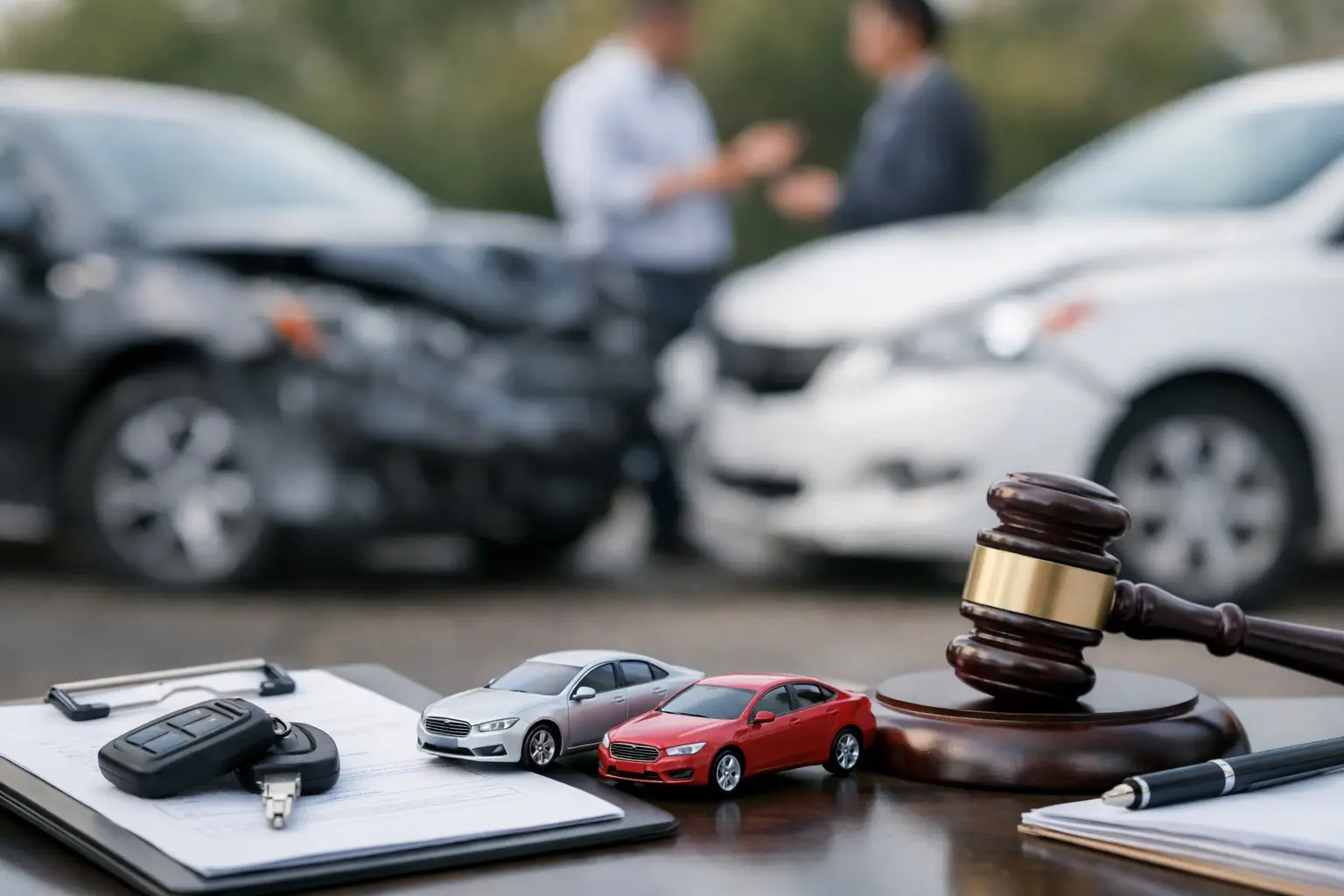
A driver runs a red light, clips your bumper, and suddenly there are repair estimates, medical bills, and a lot of unanswered questions. One of the first is usually this: what does liability car insurance cover? If you drive in California, understanding that answer matters because liability coverage is the part of your auto policy designed to protect you financially when you cause injury or property damage to someone else.
What does liability car insurance cover on an auto policy?
Liability car insurance generally covers two core things: bodily injury you cause to other people and property damage you cause to someone else’s vehicle or property. It helps pay the costs if you are legally responsible for an accident.
Bodily injury liability can help cover another person’s medical expenses, lost wages, pain and suffering, and in some cases legal costs if you are sued after a crash. Property damage liability helps pay for repairs to another person’s car, but it can also apply to damaged fences, mailboxes, storefronts, light poles, or other property affected by the accident.
That distinction matters because liability insurance is about protecting other people from losses you cause, while also helping protect your own finances from a claim or lawsuit. It is not the part of the policy that repairs your own car or pays your own medical bills.
In California, drivers must carry minimum liability limits, but minimum coverage and adequate coverage are rarely the same thing. If you cause a serious accident, costs can rise far beyond the state minimums very quickly.
The two main parts of liability coverage
Bodily injury liability
Bodily injury liability pays for injuries to others when you are at fault. That can include emergency care, hospital bills, follow-up treatment, rehabilitation, and lost income if the injured person cannot work. It may also cover legal defense costs or settlement payments if the claim turns into a lawsuit.
For example, if you rear-end another vehicle and the other driver suffers a neck injury, your bodily injury liability coverage may help pay for that driver’s medical treatment and related losses, up to your policy limits.
This coverage is usually shown as two numbers. One is the maximum your policy will pay per injured person, and the other is the maximum it will pay per accident. If several people are hurt in the same crash, the per-accident limit becomes especially important.
Property damage liability
Property damage liability pays for damage you cause to someone else’s property. Most often, that means another person’s car, truck, or SUV. But claims are not limited to vehicles.
If you hit a retaining wall, garage door, utility pole, or business signage, property damage liability may respond. It can also help cover related costs, such as repairs, replacement, or in some situations loss of use while the damaged property is being repaired.
This portion of the policy is usually listed as a single limit for each accident. If the damage exceeds your limit, you may be personally responsible for the remaining amount.
What liability car insurance does not cover
This is where many drivers get tripped up. Liability insurance does not cover everything tied to a car accident.
It typically does not pay to repair your own vehicle after a crash you caused. For that, you would generally look to collision coverage. It also does not usually pay for damage from theft, vandalism, falling objects, fire, or weather-related events like hail. Those losses are usually handled through comprehensive coverage.
Liability coverage also does not pay for your own injuries in an at-fault accident. Depending on your policy and state requirements, medical payments coverage or other optional protections may help with your own medical costs.
There are other limits too. Intentional damage, business use not disclosed on the policy, excluded drivers, or driving outside policy terms can create coverage issues. Every policy has conditions, and the details matter.
Why minimum limits may not be enough
California’s required minimum liability limits can satisfy the legal requirement to drive, but they may leave a major gap between what your policy pays and what a serious accident actually costs.
A newer vehicle can easily cost far more to repair than a low property damage limit. Medical costs can rise even faster, especially if an accident involves multiple people, ambulance transport, imaging, surgery, or extended treatment. If your policy limits are exhausted, the remaining amount may become your responsibility.
That risk is one reason many drivers choose higher liability limits than the state minimum. The goal is not just compliance. It is protecting savings, income, and long-term financial stability.
For California households with significant assets, teen drivers, frequent freeway driving, or time spent in busy coastal communities, reviewing limits carefully is especially worthwhile. More traffic, higher property values, and more expensive vehicles can all raise the stakes after an accident.
How liability limits work in real life
Suppose your policy has bodily injury liability limits of $50,000 per person and $100,000 per accident, along with $50,000 in property damage liability. If you cause an accident that injures two people, the policy could pay up to $50,000 for each injured person, but no more than $100,000 total for the accident. For property damage, it could pay up to $50,000 for damage to the other vehicle or other property.
Now imagine the total medical bills and legal settlement reach $175,000, and property damage totals $65,000. Your insurance would pay up to your limits, and you could be responsible for the difference.
This is why liability coverage should be chosen with real-world costs in mind, not just the lowest available premium.
When liability coverage applies and when fault matters
Liability insurance usually comes into play when you are found legally responsible for an accident. Fault can be clear in some cases and disputed in others. Insurance companies investigate based on driver statements, police reports, photos, witness accounts, and applicable traffic laws.
California follows comparative negligence rules, which means fault can be shared. If multiple drivers contributed to an accident, each party’s responsibility may affect how claims are handled. That can make even a relatively simple crash more complex than expected.
Because of that, policyholders benefit from having an advisor who can explain what coverage applies and where additional protection may make sense. A policy should fit how you actually drive, where you drive, and what you need to protect.
Coverage that is often confused with liability insurance
Drivers often lump all auto insurance together, but each piece serves a different purpose. Collision coverage helps repair your own car after a crash, regardless of fault. Comprehensive coverage helps with non-collision losses such as theft, storm damage, or vandalism. Uninsured and underinsured motorist coverage can help if the at-fault driver has too little insurance or none at all.
Medical payments coverage may help with medical expenses for you and your passengers, depending on the policy. Roadside assistance and rental reimbursement are separate add-ons, not part of liability coverage.
Understanding these differences is what turns auto insurance from a legal requirement into meaningful protection.
How much liability car insurance should you carry?
There is no one-size-fits-all answer. The right amount depends on your assets, income, vehicle use, driving habits, and comfort with risk. A driver with substantial savings or a home may want higher limits because there is more to protect if a major claim exceeds basic coverage.
It also depends on where and how you drive. If you commute daily, drive in dense traffic, transport family members often, or spend time in higher-value coastal areas where repair and medical costs can be steep, stronger limits may be a smart move.
Many drivers also consider an umbrella policy for broader liability protection above auto and home limits. That extra layer can be valuable for households that want more confidence in worst-case scenarios.
A good insurance conversation should not begin and end with price. It should look at what could happen, what your current limits actually cover, and whether those limits still match your life.
A more confident way to review your coverage
If you have ever wondered whether your policy is enough, you are not alone. The question is not only what does liability car insurance cover, but whether your current limits would truly protect you after a serious accident.
That is where personalized guidance makes a difference. Rather than settling for a generic quote, California drivers often benefit from a local review that looks at coverage gaps, real exposure, and the level of protection that fits their household. Central Coast Insurance helps drivers take that next step with advice built around the realities of California roads, coastal communities, and the things worth protecting most.
The best auto policy is not simply the cheapest one on paper. It is the one that still feels solid when life gets expensive, stressful, and unexpectedly complicated.