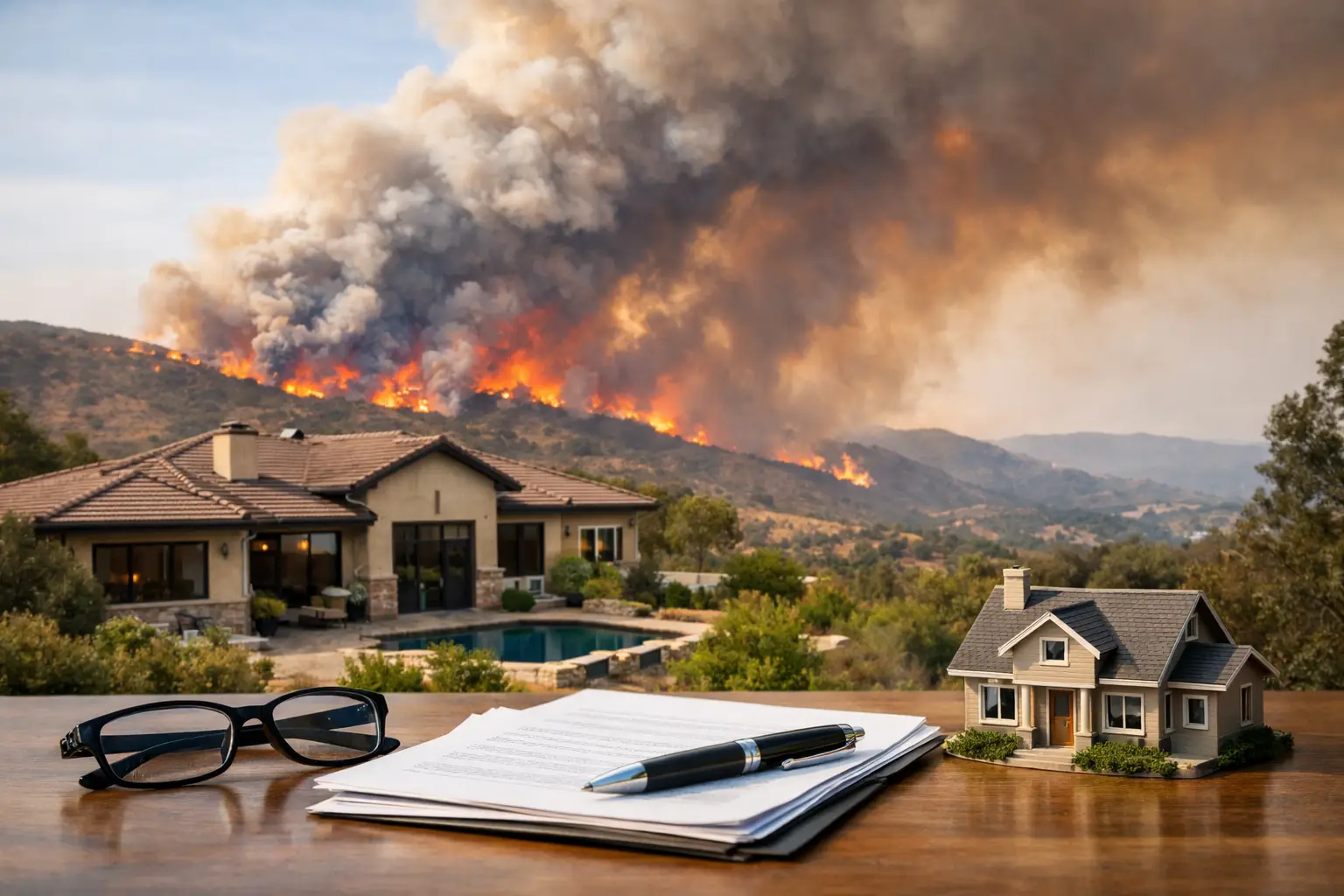
A home can sit miles from the nearest forest and still be affected by wildfire underwriting changes. In California, insurers increasingly assess a property's ability to resist ember-driven fires, the roads leading to it, and the surrounding vegetation before offering or renewing coverage. For homeowners on the Central Coast and throughout the state, the question is no longer simply, “What will my premium be?” It is also, “Will my home qualify, and what can I do to strengthen my options?”
These changes can feel personal, especially when a family has maintained coverage for years without a claim. But underwriting decisions are generally tied to a carrier's capacity, reinsurance costs, statewide risk concentration, and updated property-level data. Understanding what is changing can help you make better decisions before a renewal notice or non-renewal creates pressure.
What Wildfire Underwriting Changes Mean
Underwriting is the process an insurance company uses to decide whether it can insure a property, on what terms, and at what price. Wildfire risk has made that process more detailed. Rather than relying only on a ZIP code, many insurers now use aerial imagery, mapping models, inspection reports, and public fire-risk information to evaluate individual homes.
That means two houses on the same street may receive different underwriting decisions. One may have a clear perimeter, a newer roof, accessible roads, and a nearby fire hydrant. Another may be surrounded by dense brush, have overhanging trees, or sit at the end of a narrow road that could be difficult for fire crews to reach.
A higher wildfire score does not automatically mean a homeowner cannot get insurance. It may mean fewer carriers are available, the policy has a separate wind or wildfire deductible, coverage is more selective, or the homeowner needs to make risk-reduction improvements before a carrier will consider the property.
It also helps to separate underwriting from pricing. A premium increase may reflect broader claims costs or rebuilding expenses, while an underwriting decision concerns whether the insurer will write, renew, or modify coverage on the home at all. Both can happen at the same time, but they are not identical.
What Insurers Are Reviewing More Closely
Most carriers consider the property itself, its surroundings, and how a wildfire could reach the structure. Their criteria differ, and no homeowner can guarantee a particular insurer's decision. Still, several factors appear regularly in wildfire evaluations.
The home's first line of defense
The roof is often one of the first features reviewed. A well-maintained, fire-resistant roof can be a meaningful advantage, while aging materials, accumulated debris, or visible damage may raise concern. Insurers may also look at vents, eaves, decks, siding, windows, gutters, and attachments such as sheds or fences that connect directly to the home.
Embers can travel far ahead of an active fire. They can collect in dry leaves, enter vulnerable vents, or ignite combustible materials near the structure. As a result, small maintenance details can carry more weight than they once did.
Defensible space and vegetation maintenance
Clear, maintained space around a home is a practical risk-control measure and an increasingly visible underwriting factor. Carriers may review whether vegetation is trimmed back, whether brush is managed, and whether firewood, patio furniture, propane tanks, or other combustible items are stored close to the structure.
California's defensible-space requirements and a carrier's underwriting standards are related but not always the same. Meeting a local requirement is essential, yet an insurer may apply its own guidelines based on current conditions, imagery, or its overall appetite in an area. Keeping records of professional tree work, brush clearing, and property maintenance can be helpful if questions arise.
Access, terrain, and nearby exposure
A property's location matters beyond its street address. Steep slopes can allow fire to move faster. Long driveways, limited turnarounds, narrow roads, and a lack of nearby water sources can affect a carrier's assessment of emergency access.
Insurers may also evaluate neighboring properties. An impeccably maintained home can still face elevated exposure if adjacent parcels contain unmanaged vegetation or structures sit very close together. That can be frustrating, but it is one reason local, property-specific guidance matters when evaluating insurance options.
Concentration of risk
Even a well-protected home may be declined by a carrier that has reached its limit for a community, county, or fire-prone region. Insurers manage how much exposure they carry in one area so a single catastrophic event does not overwhelm their ability to pay claims.
This is one of the most difficult parts of the current market because it is not something a homeowner can fix with maintenance alone. It is also why shopping only after a non-renewal can lead to fewer choices. Starting early gives you more time to understand the market and prepare the information insurers may need.
How to Respond Before Your Renewal Date
The most useful response to tighter underwriting is proactive preparation, not panic. Review your policy well before its renewal date, particularly if you have received a questionnaire, inspection request, premium change, or notice from your insurer. Ask what coverage is changing, what deadline applies, and whether the carrier has identified any property conditions that need attention.
Then make sure your coverage amount reflects what it would cost to rebuild today. Market availability should not lead homeowners to accept inadequate dwelling limits simply to keep a policy in place. Rebuilding costs can be affected by local labor demand, material prices, building code upgrades, debris removal, and the complexity of a custom or coastal home.
Pay attention to the policy beyond the dwelling limit. Extended replacement cost, ordinance or law coverage, personal property limits, loss-of-use coverage, and separate deductibles can make a substantial difference after a loss. A lower premium may come with a higher deductible or narrower terms, which may be appropriate for some households but should be a deliberate financial choice.
For many California homeowners, coverage may involve more than one policy. The California FAIR Plan can provide a source of basic property coverage when standard-market options are limited. Depending on the situation, homeowners may also need a separate difference-in-conditions policy to address liability, water damage, theft, loss of use, and other protections not included in the FAIR Plan policy. This arrangement can be valuable, but it requires careful coordination so gaps are not overlooked.
Practical Improvements That May Support Insurability
Home hardening is not a promise of coverage or a substitute for a policy review. It can, however, reduce vulnerability and improve the story your property tells during underwriting. Prioritize improvements based on the home's condition, local fire exposure, budget, and applicable building requirements.
Start with the work that is visible and defensible: remove dry debris from roofs and gutters, maintain the space around the house, trim vegetation away from structures, and keep access routes clear. If renovations are planned, consider fire-resistant materials for roofing, siding, vents, decking, and windows where appropriate.
Documentation matters, too. Keep dated photos of the home exterior and surrounding landscape. Save receipts for roof replacement, vegetation management, vent upgrades, and other risk-reduction work. A current photo record can help clarify conditions when aerial images are outdated, obstructed, or fail to show recent maintenance.
Do not make changes solely because a neighbor says an insurer required them. Carrier guidelines vary, and some recommendations involve significant expense. Before committing to major work, ask whether it addresses a specific underwriting concern, improves your home's actual fire resilience, or both.
Wildfire Underwriting Changes for Business Owners
Commercial property owners face many of the same pressures, with additional concerns around business interruption, tenant operations, inventory, and liability. A restaurant, winery, contractor yard, retail shop, or professional office may need to show that outdoor storage, landscaping, access points, and building maintenance are being managed with wildfire exposure in mind.
Business owners should review whether their limits account for rebuilding and replacing equipment at current costs, as well as the income they could lose during a covered shutdown. A wildfire can disrupt operations even when flames do not damage the building directly. Road closures, utility outages, evacuations, and smoke conditions can all affect revenue.
A thoughtful review should also look at personal and commercial coverage together. For business owners who work from home, store equipment on-site, or use personal vehicles for business purposes, gaps can develop when policies no longer match the way the business operates.
A Better Way to Approach a Changing Market
California's insurance market is changing, but homeowners and business owners are not without choices. The strongest position comes from knowing your property's exposures, maintaining the features you can control, and reviewing coverage early enough to consider alternatives without rushed decisions.
Central Coast Insurance can help clients compare available options and understand how policy terms fit the property, household, or business being protected. The goal is not to chase the lowest number on a quote. It is to build protection that remains useful when a difficult season becomes a real loss.
Your home or business deserves more than a last-minute insurance decision. A timely coverage conversation can turn uncertainty about wildfire risk into a clear plan for protecting what you have built.